
Introduction
Cell division is a fundamental process that allows organisms to grow, repair tissues, and reproduce. It ensures that genetic information is accurately passed from one cell to another.
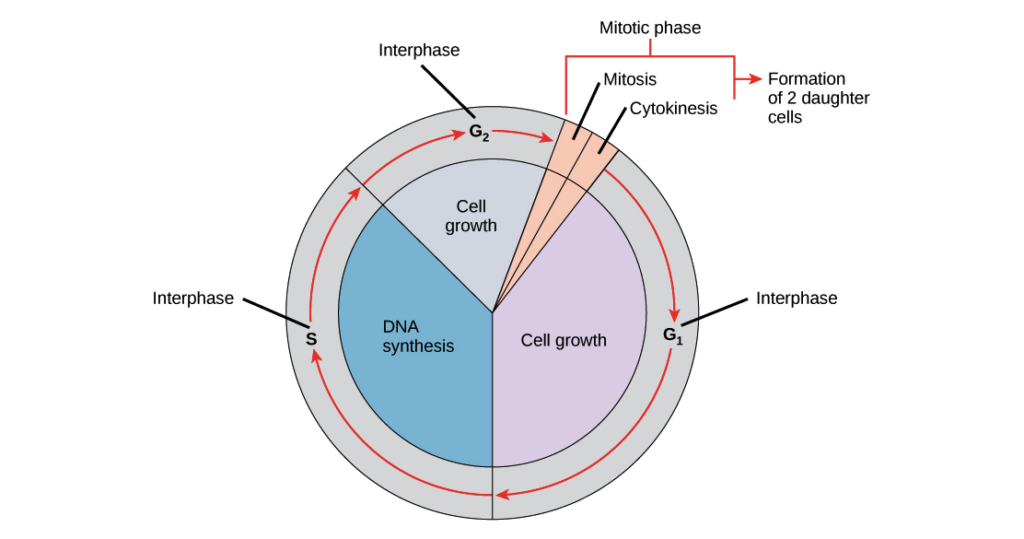
The Cell Cycle
The cell cycle consists of several stages:
- Interphase
- Mitosis
- Cytokinesis
Stages of Mitosis
1. Prophase
Chromosomes become visible and the nuclear membrane begins to break down.
2. Metaphase
Chromosomes align in the center of the cell.
3. Anaphase
Chromosomes are pulled apart to opposite ends.
4. Telophase
New nuclear membranes form around each set of chromosomes.
Cytokinesis
The cytoplasm divides, resulting in two identical daughter cells.
Importance of Cell Division
- Growth of organisms
- Tissue repair
- Replacement of damaged cells
Accuracy in Division
Proper division ensures genetic consistency, which is crucial for normal functioning.
Conclusion
Cell division is essential for life, enabling growth and continuity of organisms.