
Introduction
Cell biology is the study of cells, which are the smallest units capable of performing all vital functions of life. Every living organism, from single-celled bacteria to complex multicellular organisms, is made up of cells. Understanding how cells are structured and how they function provides a foundation for exploring all biological processes.
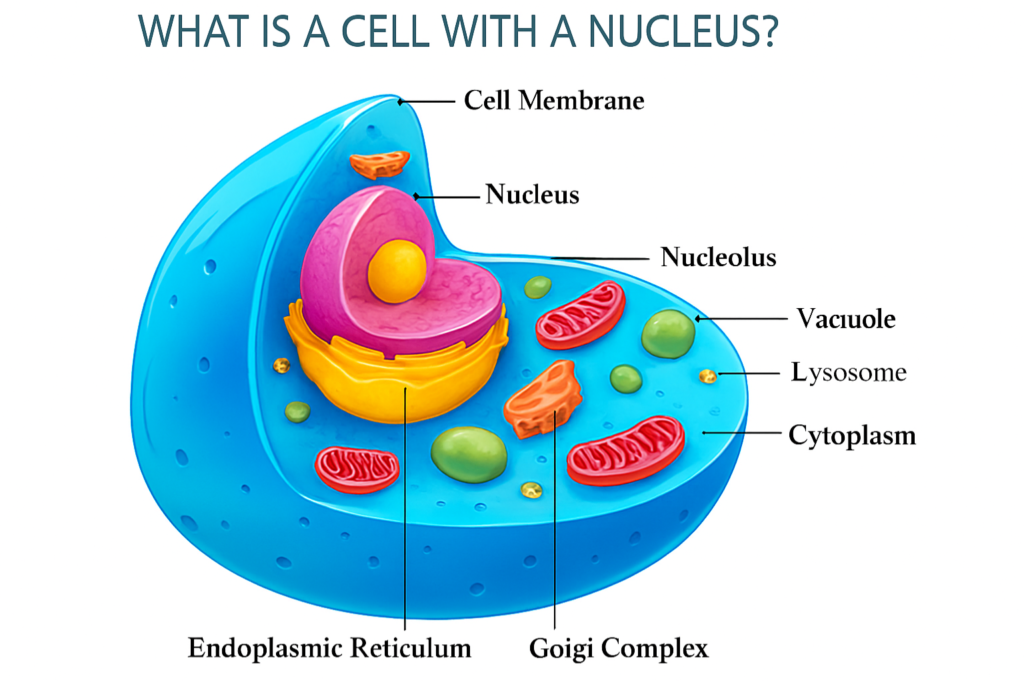
What is a Cell?
A cell is a basic structural and functional unit of life. It contains specialized components known as organelles, each responsible for specific tasks that keep the cell alive and functioning efficiently.
Types of Cells
Cells are broadly classified into two main types:
- Prokaryotic Cells: Simple cells without a defined nucleus (e.g., bacteria)
- Eukaryotic Cells: Complex cells with a nucleus and membrane-bound organelles (e.g., human cells)
Key Cell Organelles and Their Functions
1. Nucleus
The nucleus acts as the control center of the cell. It contains DNA, which holds the genetic instructions needed for growth and reproduction.
2. Mitochondria
Known as the powerhouse of the cell, mitochondria generate energy in the form of ATP through cellular respiration.
3. Cell Membrane
The cell membrane surrounds the cell and regulates the movement of substances in and out, maintaining internal balance.
4. Cytoplasm
This gel-like substance fills the cell and provides a medium for chemical reactions to occur.
5. Ribosomes
Ribosomes are responsible for protein synthesis, translating genetic information into functional proteins.
Cell Function and Coordination
Cells work in a highly coordinated manner. Each organelle contributes to maintaining the cell’s stability and efficiency. This coordination ensures proper functioning of tissues and organs in multicellular organisms.
Importance of Cell Biology
Understanding cell structure and function is essential for studying life processes such as growth, reproduction, and energy production.
Conclusion
Cell biology forms the foundation of all biological sciences. By understanding how cells work, we gain valuable insight into the complexity of life itself.